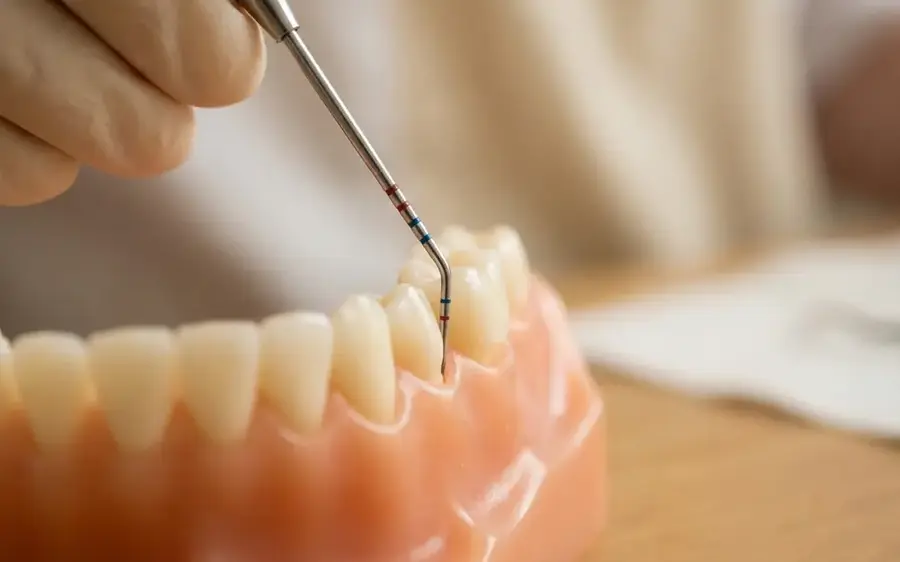
Periodontal Screening Index (PSI)
The PSI shows within a few minutes whether periodontal treatment is necessary. The examination is painless, and the finding gives the personal risk of disease.
More on thisIndependent patient portal
Gums and jawbone: how periodontitis develops, how to recognise it and what a treatment really achieves.
The Periodontology Adviser explains what happens when the tooth-supporting apparatus becomes diseased and what a treatment can achieve. It answers the questions that arise before the first appointment – independently and without advertising.
Alongside the explanations you will find advice on dental care, a glossary of technical terms, detailed articles under Dental knowledge and current reports under News. Anyone looking for a practice can enter their postcode in the dentist search.
That wish lies at the heart of a dentistry built on prevention. Careful oral hygiene at home and professional support at the practice are not opposites but two halves of the same path – and they spare you elaborate treatment later on.
Frequently sought
 What is periodontitis?How the inflammation arises and what it destroys.
 What is gingivitis?The early stage – and why it can still be reversed.
 How does the treatment go?From the first examination to the follow-up care.
 How do I prevent it?What helps at home and what the practice contributes.
 Who treats this well?Practices working in periodontology near you.
The PSI shows within a few minutes whether periodontal treatment is necessary. The examination is painless, and the finding gives the personal risk of disease.
More on this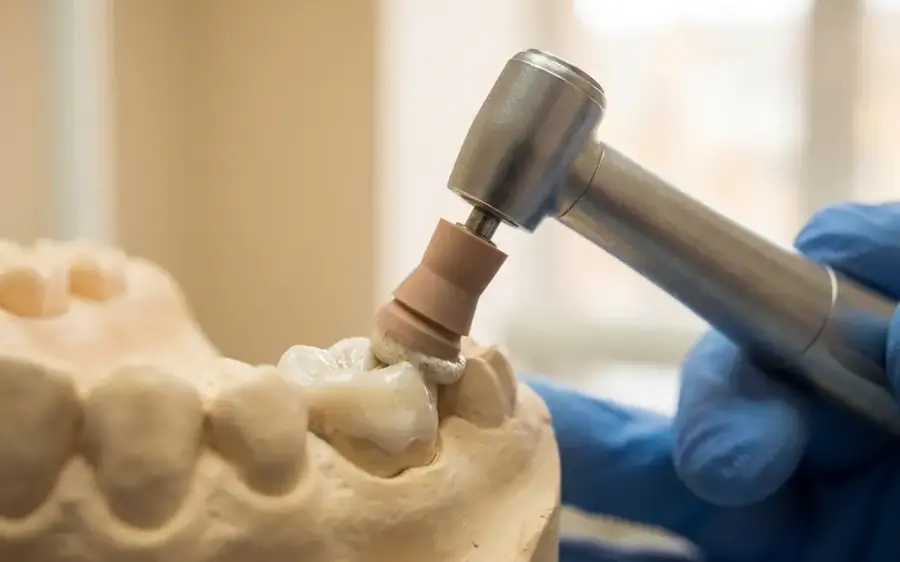
It is one element of every modern prevention concept. Every natural tooth kept is better than the best replacement – and the cleaning is the cheapest part of the way there.
More on this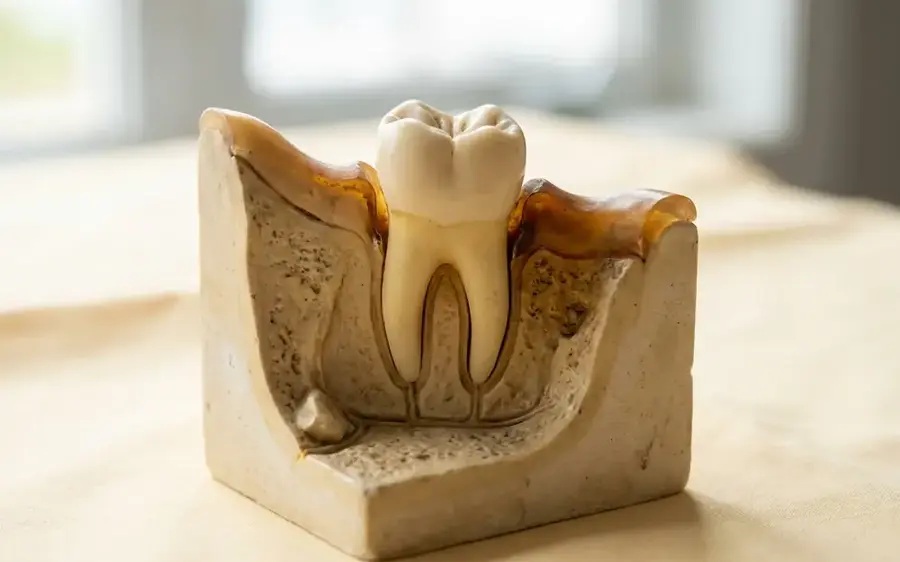
An inflammatory disease of the structures holding the tooth – regardless of age, on one tooth or on many, advancing at different speeds and in varying degrees of severity.
More on thisMore current reports can be found here
08.09.2026
Anyone planning an implant who has untreated periodontitis should know the order of things.
Weiterlesen →11.08.2026
Many consider it harmless because it is common. Common, here, does not mean normal.
Weiterlesen →09.06.2026
Systematic reviews find a small advantage for powered toothbrushes. The difference between brushing and not brushing is larger.
Weiterlesen →Practice website by dentalspezialisten.de
Here and in four further specialist portals, as long as your website runs with us – whether rented or bought. Texts, images, technology and upkeep are ours.
The same website as with the rental – you pay for it once instead of monthly.
Three finished drafts, in your inbox within 48 hours – free of charge and without obligation
You get in touch if you like one of them – not the other way round.
We use your details only for the drafts – see the privacy notice for more.
We do not call youNo appointmentNo obligation
Answered briefly
The cost depends on the steps involved and on which teeth are affected, so it differs from patient to patient. Before treatment begins, the practice draws up a treatment and cost plan setting out the charges. It also shows which costs the statutory health insurer covers and which additional services you have to pay for yourself.
An implant can last many years – what matters is how healthy the surrounding tissue stays. Anyone who has had periodontitis carries a higher risk: the same bacteria can attack the tissue around an implant. This is known as peri-implantitis.
Periodontitis should therefore be fully treated before an implant is placed. After that, aftercare decides the outcome: regular check-ups, professional cleaning and careful oral hygiene at home. On those terms, implants remain a reliable solution even after periodontitis.
Follow your dentist's instructions closely. They will tell you exactly what to watch out for.
A single application of enamel matrix proteins is normally sufficient. The regenerative process they set in motion continues over a longer period – often for more than a year.
Consistent oral hygiene is the key. Your practitioner will tell you whether further rules apply in your case – cutting down on smoking or giving it up, for instance.
Periodontal disease is usually caused by bacteria that settle between tooth and gum and trigger an inflammation. Existing systemic conditions such as diabetes, stress or inadequate oral hygiene can also influence how the disease progresses.
The first signs of periodontal disease are red, swollen gums, bleeding gums, receding gums, pain in the teeth and gums, loosened teeth, a bad taste in the mouth and bad breath.
Under 'Find a dentist' you can enter your postcode and narrow the search area to find a practitioner near you.
Bleeding gums can be a sign of periodontal disease. If it happens regularly, for example when brushing, you should consult your dentist.
During the active phase of treatment your dentist sets the intervals between appointments; depending on the stage of the disease these can be close together. Even without periodontal disease you should attend a check-up once or twice a year.
Detected in time, the progress of periodontal disease and the loss of one or more teeth can be prevented in most cases. If a tooth is already damaged beyond saving, removal is often the only option.
Connections exist with diabetes mellitus in particular, where poorly controlled blood sugar is a risk factor. Caries, stress or a generally weakened immune system can also encourage periodontitis. Periodontitis is in turn considered a risk factor for heart disease, for the premature birth of underweight babies and for arthritis. Hormonal changes during pregnancy can likewise trigger periodontal disease.
Gingivitis can be treated by improved and consistent oral hygiene. If gum problems persist, a dentist should always be consulted.
Depending on how far the periodontal disease has advanced and on the wish to keep the affected tooth, a surgical procedure may be unavoidable. Your dentist will tell you whether it is necessary in your case.
Yes, periodontitis can be transmitted – for example by sharing a toothbrush or cutlery, or by moistening a dummy in your own mouth.
Recent studies have shown that tissue rebuilt with the help of enamel matrix proteins was still stable after five years.
In the worst case, untreated periodontal disease leads to the loss of the affected tooth or teeth.
The Parodontologie-Berater is an independent information portal for patients – without advertising. Besides the explanations you will find a glossary of the technical terms here, detailed articles under Dental knowledge and current reports under News . Anyone looking for a practice enters a postcode in the search .